

Epiretinal membrane
We perform surgery for macular epiretinal membrane. We have years of experience and advanced technology for the correction of retinal problems and diseases.
Home » Treatments » Retina » Epiretinal membrane
What is an epiretinal membrane?
An epiretinal membrane is a proliferation of fibrous tissue, like a sheet of “cellophane”, that grows over the macula and alters its anatomy.
What is the treatment for an epiretinal membrane?
An epiretinal membrane is treated with surgery. A microincision vitrectomy is performed, a technique in which, through trocars inserted into the sclera, and after removing the vitreous, we stain the membrane with a dye and then remove it with the help of microforceps.
Book an appointment for a retina consultation with the team of epiretinal membrane specialists at Instituto de Oftalmología Castanera
Our specialists talk about epiretinal membrane
Retina and Vitreous – Floaters
Professionals who form the medical team for epiretinal membrane
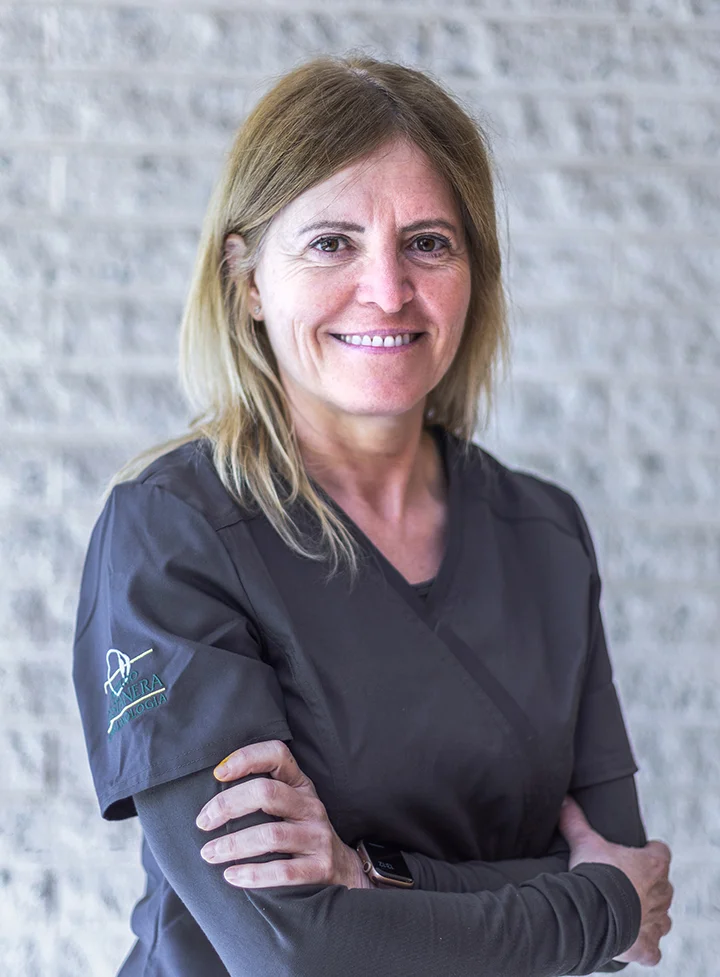
Dr. Laura Broc Iturralde
Medical license no.: 33258 COMB
Dr. Laura Broc Iturralde
Graduated in Medicine and Surgery from the University of Barcelona in 1996 and specialist in Ophthalmology since 2002. Master’s degree in Vitreoretinal Disease from the UAB, where she is an associate professor.
Her work at Instituto Castanera focuses on the medical and surgical diagnosis and treatment of retinal diseases. She takes part in clinical trials investigating the efficacy of different drugs for the prevention and treatment of age-related macular degeneration.
Medical Societies:
- Catalan Society of Ophthalmology
- Spanish Society of Ophthalmology (S.E.O)
- Spanish Society of Retina and Vitreous (S.E.R.V), board member
Frequently asked questions
It generally causes loss of visual acuity and metamorphopsia, that is, seeing straight lines as wavy.
No, not at all. It is performed under local anesthesia and in most cases no stitches are needed.
No. The retina is a very delicate tissue, and even after the epiretinal membrane has been removed, visual recovery is gradual and takes place over the months following surgery.