Cornea

We perform keratoconus surgery and treat diseases of the cornea, the transparent lens that protects the eye and on whose transparency the rest of visual function depends. We have advanced technology, essential for an accurate diagnosis of conditions such as keratoconus, and a team of highly qualified specialists who are constantly updating their knowledge.

Diseases of the cornea

The cornea is the first lens of our optical system that the images we perceive pass through. The rest of visual function depends on its health and transparency.

When its curvature is abnormal, the person suffers from vision problems such as myopia, astigmatism or hyperopia. When the cornea loses transparency, visual function is affected. That is why it is essential to look after it, have it checked regularly and treat it if it is affected by any condition.

There are many diseases of the cornea. Some of them are degenerative in nature, so prompt diagnosis and early treatment are key to halting or slowing their progression, depending on the case. Most corneal conditions require close monitoring through regular follow-up by a specialist fully and exclusively dedicated to this field.

Certain corneal conditions such as keratoconus or corneal ectasia can go unnoticed without the right technology. A state-of-the-art elevation topographer and an anterior segment optical coherence tomographer are needed to perform the tests, check whether these conditions are present and provide a fast and accurate diagnosis. At Instituto de Oftalmología Castanera we have this and other advanced equipment needed to diagnose corneal conditions.

It is important to bear in mind that a delay in detecting and diagnosing these conditions could lead to weakening of the corneal structures, making the problem worse.

Our team of highly qualified specialists in diseases of the cornea is constantly updating its knowledge in order to apply the most advanced techniques and technologies to treat these conditions. Book an appointment with us.

What are the most common diseases of the cornea?
  • Keratoconus. It is also known as corneal ectasia or keratectasia. It is a progressive disease of the cornea that mainly affects young people. It consists of thinning and increased curvature of the cornea, causing irregularities in its surface.
  • Keratitis. This is an inflammation of the cornea. It presents with redness and swelling. It can have different causes, the most common being contact lens-related infections.
  • Dry eye syndrome. This occurs when the eyes do not produce enough tears to stay moist, which causes discomfort and leads to vision problems. It is not the same as eye dryness caused by environmental conditions or by spending a lot of time in front of screens.
  • Injuries. These are small abrasions, marks and scratches on the cornea. If they are mild they may heal on their own, but when they are deep they can cause corneal scarring, leading to vision problems.
  • Allergies. Environmental allergies can irritate the eyes and cause allergic conjunctivitis or acute conjunctivitis, making the eyes red, itchy and watery. Rubbing them constantly to try to relieve these symptoms can cause corneal injuries.
  • Corneal dystrophies. In most cases they are hereditary. When material builds up in the cornea, cloudy vision appears.
  • Other diseases of the cornea: ocular herpes, corneal edema, Stevens-Johnson syndrome, iridocorneal endothelial syndrome and pterygium, among others.

Book an appointment at Instituto de Oftalmología Castanera if you have or suspect you have a disease of the cornea, or for a check-up of your eye health.

What is the treatment?

Each disease of the cornea and each case requires personalized treatment. One of the corneal conditions we are most often consulted about is keratoconus.

Keratoconus treatment must be carried out by specialists. In early-stage keratoconus, good visual acuity can be achieved by correcting the refractive error with glasses or, later on, with rigid contact lenses to correct the irregular astigmatism caused by this disease.

However, in some cases surgical treatment may be necessary. In keratoconus surgery, different techniques may be used at the specialist’s discretion.

Corneal cross-linking

This is an outpatient procedure that consists of applying riboflavin, or vitamin B2, combined with a specific dose of ultraviolet radiation. Its aim is to strengthen the cornea and halt the progressive corneal deformation caused by keratoconus, stopping the damage from advancing.

Intracorneal rings or intrastromal segments

Their purpose is to regularize the cornea when there are clear signs of progression. The rings are implanted within the thickness of the cornea. To do so, a channel or tunnel is first created with a femtosecond laser, and the rings are implanted through this channel. This flattens the central cornea and regularizes its surface.

Keratoplasty or corneal transplant

This treatment is used as a last resort when vision has decreased considerably. Nowadays, keratoplasty can be performed by selectively replacing the affected layers of the cornea while preserving the healthy tissue.

Book an appointment at Instituto de Oftalmología Castanera for the consultation, diagnosis and treatment of keratoconus or other diseases of the cornea.

Our specialists talk about the cornea

What is a corneal transplant?
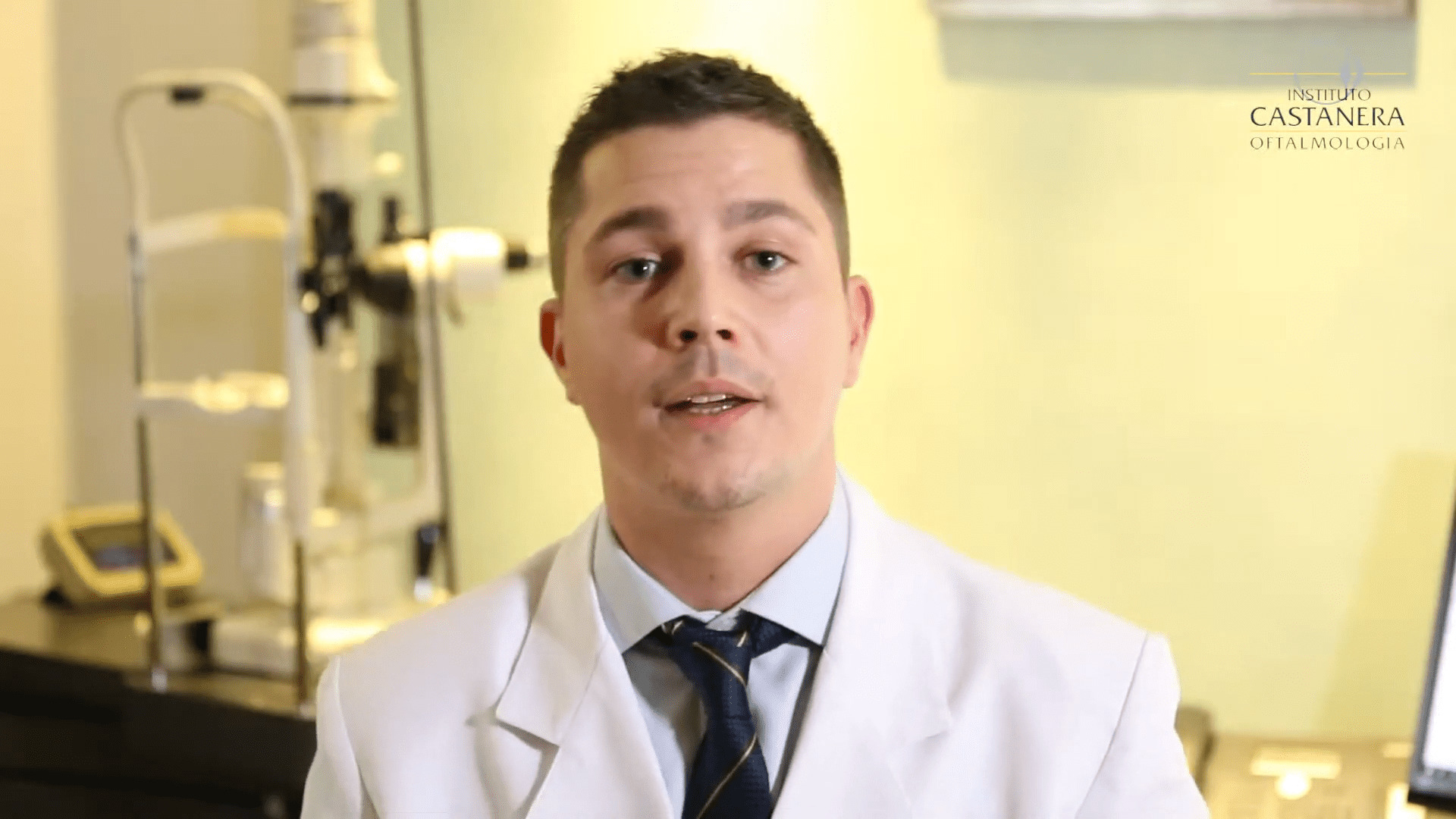
Dr. Marc Carbonell, a cornea specialist at Instituto de Oftalmología Castanera, explains what a corneal transplant, or keratoplasty, is and how many types there are.

Professionals who form the medical team for the cornea

Medical license no.: 48400 COMB

Dr. Marc Carbonell Puig

Medical license no.: 48400 COMB

Dr. Marc Carbonell Puig

Graduated in Medicine and Surgery from the University of Barcelona in 2011 and Specialist in Ophthalmology at Germans Trias i Pujol University Hospital in Badalona in 2016.

PhD in Medicine and Surgery from the UAB with a grade of Outstanding Cum Laude.

Master’s degree in Refractive Surgery from the University of Valladolid and University Expert in Refractive, Cataract and Corneal Surgery from Miguel Hernández University of Elche in 2017.

Associate Professor at the Faculty of Medicine of the Autonomous University of Barcelona, Trias i Pujol Campus.

His work at Instituto de Oftalmología Castanera focuses on anterior segment disease and surgery, cornea (corneal transplant, comprehensive keratoconus treatment), cataract surgery, and refractive and presbyopia surgery.

Medical Societies:

  • Catalan Society of Ophthalmology
  • European Society of Cataract and Refractive Surgeons (ESCRS)

Frequently asked questions

In some cases they cannot, as they are hereditary diseases. What can be done is ongoing follow-up and treatment to slow their progression. However, some good habits can help prevent others: for example, improving your habits to avoid dry eyes, wearing protective glasses when doing hazardous work such as gardening or DIY to prevent injuries, and not touching your eyes with your fingers, or rubbing them, to avoid corneal infections.

It depends on each disease, but you may suspect there is a problem if you have blurred vision, red or watery eyes, or eye pain. Also if you notice sensitivity to light. But bear in mind that in some cases symptoms appear when the damage is already advanced. Regular check-ups are always recommended.

Come to our clinic for follow-up. Early diagnosis and early treatment are key to preventing further damage.

Both the surgery and the postoperative period are virtually painless.

Phone:

+34 932 173 704

Language: