
Presbyopia (tired eyes)
We correct presbyopia, or tired eyes, so you can focus and see clearly up close without glasses or contact lenses. We have a highly qualified and experienced team of professionals and advanced technology for the treatment of presbyopia.
Home » Treatments » Presbyopia (tired eyes)
What is presbyopia, or tired eyes?
It is a normal phenomenon consisting of a progressive difficulty focusing up close, caused by the loss of elasticity of the crystalline lens, which reduces its capacity for accommodation. Its onset is age-related, starting at around 40–45 years of age, and it increases progressively.
Presbyopia occurs equally regardless of the eye’s refractive error.
Schedule a consultation at Instituto de Oftalmologia Castanera.
What is the treatment?
Presbyopia surgery is an effective treatment to avoid or reduce the use of reading glasses. In addition to the convenience for the patient of no longer needing glasses or contact lenses, surgery to correct presbyopia also makes it possible to correct, at the same time, other refractive errors that negatively affect their vision, such as myopia, hyperopia or astigmatism.
These are outpatient procedures that do not require hospitalization. The patient can return home on the same day as the surgery.
Intraocular technique (Clear Lens Extraction, CLE)
The crystalline lens is the eye’s natural lens, which under normal conditions allows the image to be properly focused. Clear lens extraction consists of removing the crystalline lens, in a similar way to cataract surgery, and replacing it with a Premium intraocular lens.
This Premium multifocal or trifocal intraocular lens has, in each case, the power needed to achieve good distance, intermediate and near focus.
Specifically, trifocal intraocular lenses are designed to provide adequate distance and near focus simultaneously. As a result, they reduce or completely eliminate dependence on glasses. Published studies show that 92% of patients treated with this technique no longer need to wear glasses.
There are also other types of intraocular lenses, known as extended depth of focus (EDoF) lenses, which allow focusing at distance as well as at intermediate range.
Schedule a consultation if you have tired eyes or are in the age range in which presbyopia commonly appears, from age 40 onward.
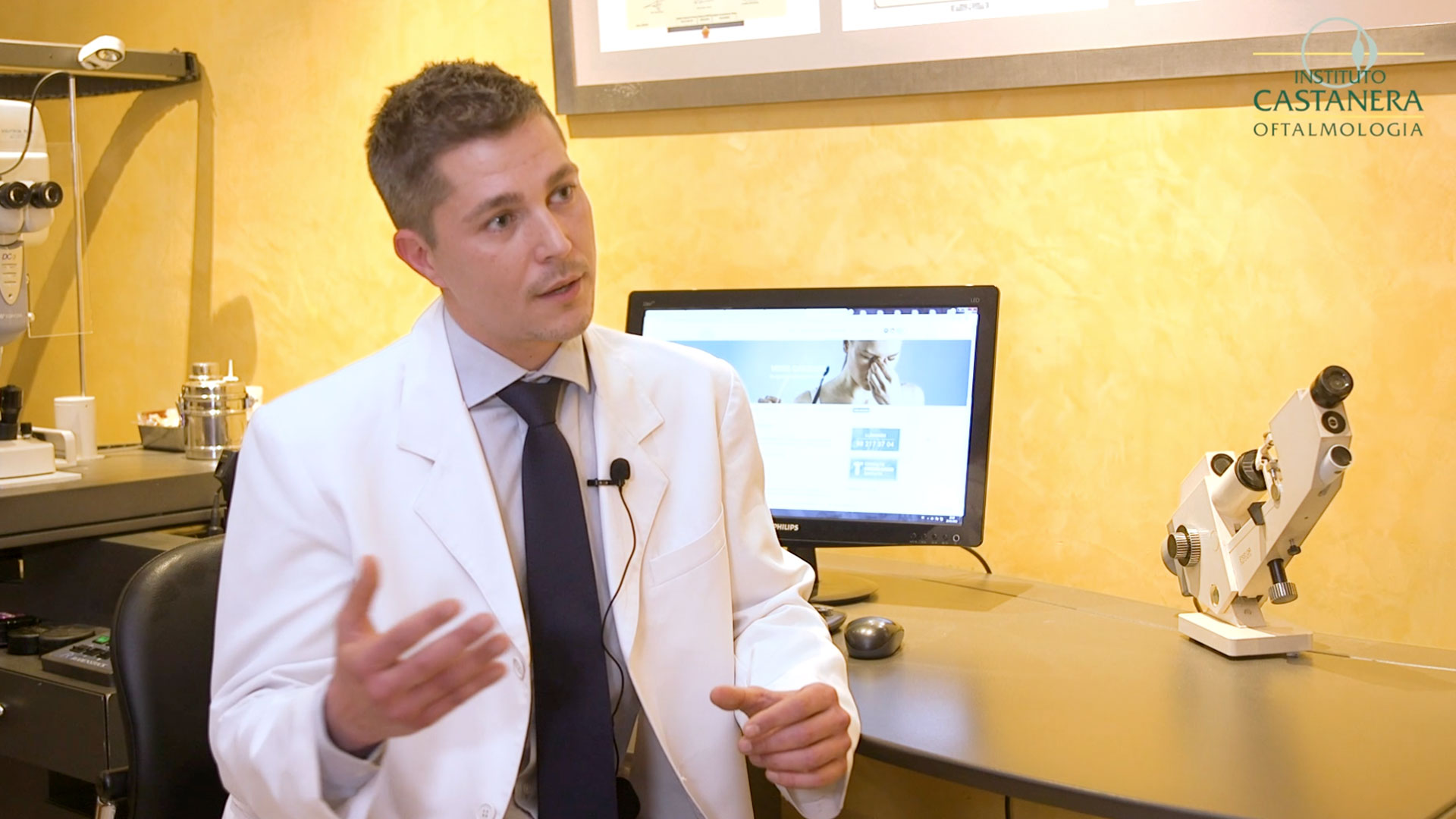
Our specialists talk about presbyopia
What is presbyopia and why does it occur?
Professionals who form the medical team for presbyopia
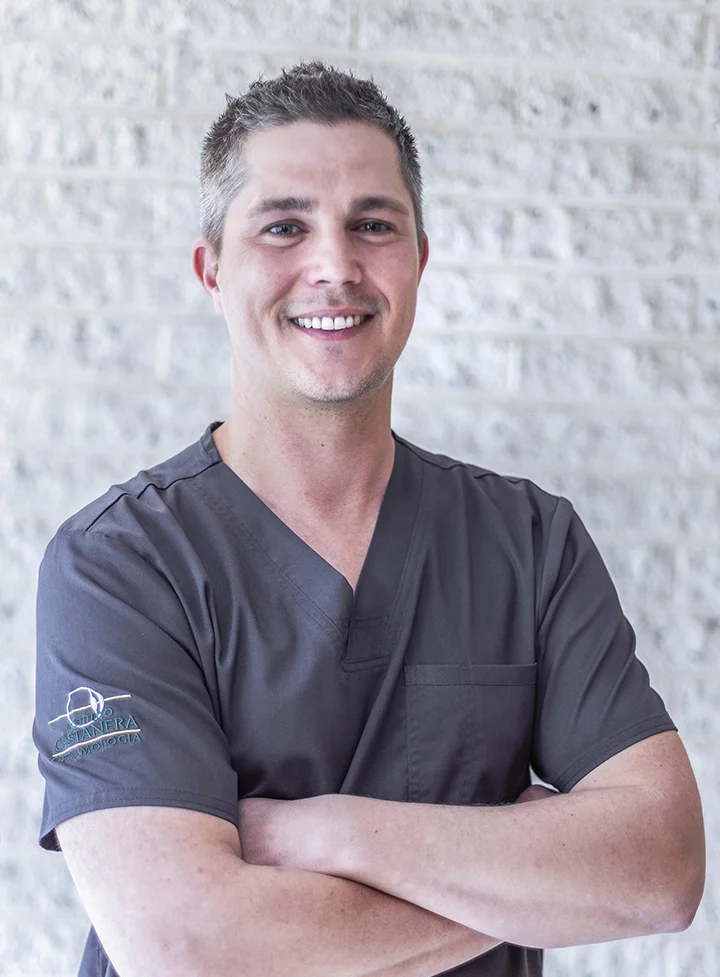
Dr. Marc Carbonell Puig
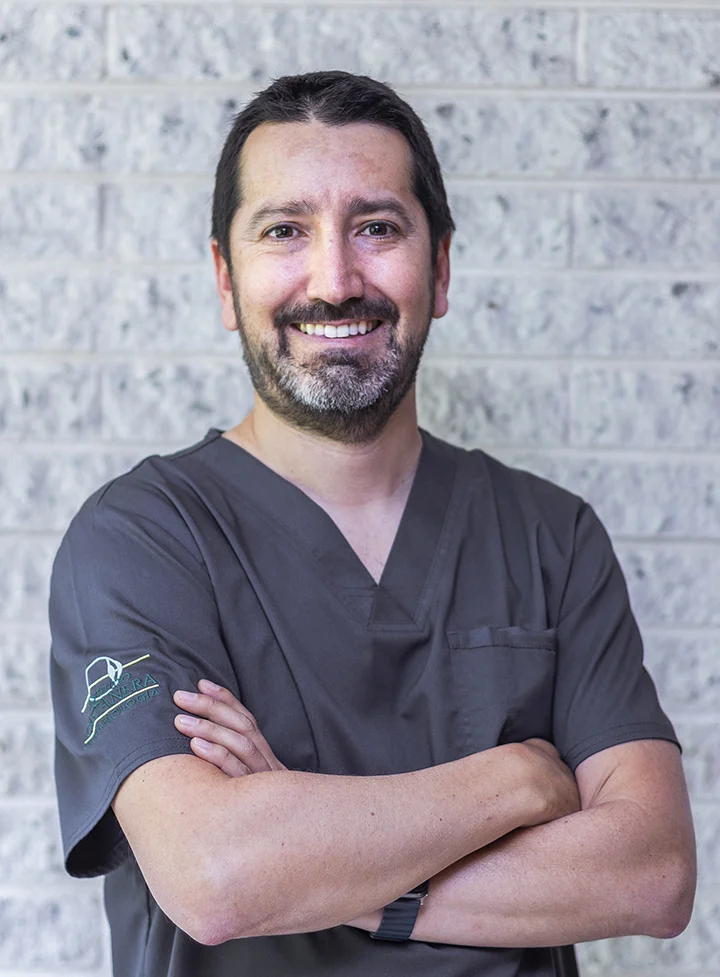
Dr. Reinaldo Cancino Muñoz
Medical license no.: 48400 COMB
Dr. Marc Carbonell Puig
Graduated in Medicine and Surgery from the University of Barcelona in 2011 and Specialist in Ophthalmology at Germans Trias i Pujol University Hospital in Badalona in 2016.
PhD in Medicine and Surgery from the UAB with a grade of Outstanding Cum Laude.
Master’s degree in Refractive Surgery from the University of Valladolid and University Expert in Refractive, Cataract and Corneal Surgery from Miguel Hernández University of Elche in 2017.
Associate Professor at the Faculty of Medicine of the Autonomous University of Barcelona, Trias i Pujol Campus.
His work at Instituto de Oftalmología Castanera focuses on anterior segment disease and surgery, cornea (corneal transplant, comprehensive keratoconus treatment), cataract surgery, and refractive and presbyopia surgery.
Medical Societies:
- Catalan Society of Ophthalmology
- European Society of Cataract and Refractive Surgeons (ESCRS)
Medical license no.: 43.437
Dr. Reinaldo Cancino Muñoz
Graduated in Medicine and Surgery from the University of Concepción, Chile, in 2006 and specialist in Ophthalmology at Hospital de la Santa Creu i Sant Pau in 2012.
Master’s degree in Refractive Surgery from the University of Barcelona.
Fellow of the European Board of Ophthalmology.
His work at Instituto de Oftalmología Castanera focuses on anterior segment disease and surgery, cataract surgery, and refractive and presbyopia surgery.
Medical Societies:
- Catalan Society of Ophthalmology
- Spanish Society of Implant-Refractive Surgery (S.E.C.O.I.R)
- European Society of Cataract and Refractive Surgeons (E.S.C.R.S)
Frequently asked questions
Patients with presbyopia notice that they begin to see nearby objects as blurry. They find that they need to hold objects farther away to see them more clearly and that they need more light for close-up tasks. Some patients even get headaches after spending a long time trying to focus up close.
Around the age of 40–45. In fact, it affects more than 90% of people over 45.
Presbyopia cannot be prevented because it is linked to the aging process of the eye. It is a deterioration that appears with age, so everyone will eventually develop presbyopia beyond a certain age. However, you can have regular check-ups of your eye health for early detection and correction.
Presbyopia can be corrected with glasses or contact lenses or with intraocular surgery.
Currently, clear lens extraction is the best surgical option for correcting presbyopia. It involves replacing the crystalline lens with an intraocular lens using a technique similar to the one we use for cataract surgery. This technique provides good focus at all distances without the need for glasses. However, after a detailed examination of your eye, the specialist will advise you on the most suitable solution for your case.
At Instituto Castanera we offer different types of lenses, including trifocal lenses and extended depth of focus lenses (EDOF), among others. Depending on the anatomical characteristics of each eye and the visual needs of each patient, we will advise you on the right one for you.
No, not everyone is a candidate for presbyopia surgery and, in addition, each patient must receive a solution tailored to their specific case. It is very important to have a thorough eye examination to confirm that the patient is a candidate for this type of procedure and to rule out any condition that may contraindicate it.
In addition to ophthalmological factors, other factors must be assessed, including age, type of work, hobbies, lifestyle and, in general, each patient’s distance, intermediate and near vision needs. In this way, we select the type of lens that best suits the patient’s characteristics.
This surgical technique is generally considered from the age of 50. However, depending on each patient’s prescription, the surgery can be brought forward or postponed until the most appropriate time. At your consultation, after studying your case, we will advise you on the right option for you.
Yes, other refractive errors such as myopia, hyperopia and astigmatism can be corrected in a single procedure if necessary, provided that the criteria for this surgery are met.
The main side effect of this surgery, especially with trifocal lenses, is that some patients may experience glare or halos at night due to the lens technology. However, this problem has been minimized with latest-generation lenses and diminishes with neuroadaptation. At Instituto Castanera we use advanced technology and latest-generation lenses to minimize or eliminate these drawbacks.