


Age-related macular degeneration

We prevent age-related macular degeneration with check-ups and preventive treatments. Advanced science and our team of specialists work hand in hand to act promptly.

What is age-related macular degeneration?

Age-related macular degeneration (AMD) is a disease that appears around the age of 60, in which we observe an alteration in vision due to the presence of atrophy, blood or fluid in the macula (the most central part of the retina).

At Instituto de Oftalmología Castanera, we perform these tests and create a personalized plan tailored to each patient who needs it, which may include monitoring, early detection, preventive treatments and action on the risk factors for developing this problem in their eyes, according to the specialist’s professional judgment.

To detect your likelihood of developing age-related macular degeneration early and have a personalized monitoring and prevention plan if your case requires it, book an appointment at Instituto de Oftalmología Castanera.

What is the treatment?

Treatment will depend on the type of AMD. In the dry form, antioxidant supplements can be given to try to prevent progression to more severe forms. New intravitreal drugs have recently been approved, opening up a promising new option for dry AMD. In the wet form, the use of intravitreal anti-VEGF agents helps stabilize the disease and therefore the vision.

Book an appointment for diagnosis and monitoring of age-related macular degeneration at Instituto de Oftalmología Castanera.

Our specialists talk about macular degeneration

What is age-related macular degeneration?
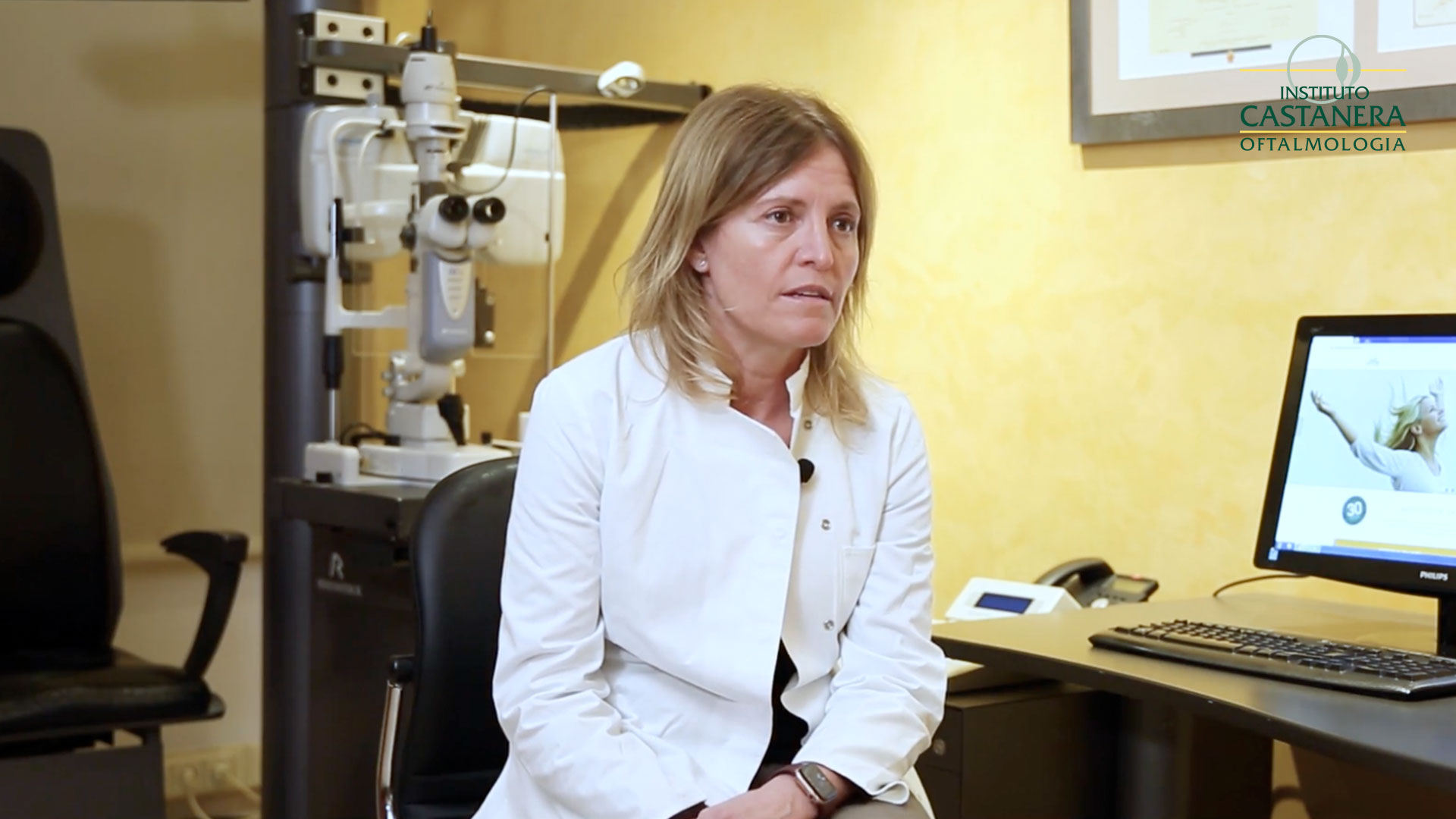
Dr. Laura Broc of Instituto de Oftalmología Castanera explains age-related macular degeneration, its types, causes, symptoms and treatments, offering a complete guide to this eye disease.

Professionals who form the medical team for macular degeneration

Medical license no.: 33258 COMB

Dr. Laura Broc Iturralde

Medical license no.: 33258 COMB

Dr. Laura Broc Iturralde

Graduated in Medicine and Surgery from the University of Barcelona in 1996 and specialist in Ophthalmology since 2002. Master’s degree in Vitreoretinal Disease from the UAB, where she is an associate professor.

Her work at Instituto Castanera focuses on the medical and surgical diagnosis and treatment of retinal diseases. She takes part in clinical trials investigating the efficacy of different drugs for the prevention and treatment of age-related macular degeneration.

Medical Societies:

  • Catalan Society of Ophthalmology
  • Spanish Society of Ophthalmology (S.E.O)
  • Spanish Society of Retina and Vitreous (S.E.R.V), board member

Frequently asked questions

No. First, because the surface of the eyeball is anesthetized by instilling eye drops. In addition, the injection is performed with a very fine needle, so the patient feels practically nothing throughout the entire procedure.

Yes, mainly two. “Dry” AMD, in which the retinal layers become thinner in the central area, and “wet” AMD, in which there is blood and fluid in the macular area.

It typically affects central vision, impairing the ability to read and to see people’s facial features in detail.

In the early stages, the patient may experience “metamorphopsia”, that is, seeing straight lines as wavy. In more advanced stages, the patient may experience a “central scotoma”, a spot in the center of the visual field that prevents them from reading and seeing the details of things.

Phone:

+34 932 173 704

Language: