Amblyopia
We correct amblyopia or “lazy eye” in childhood with the appropriate treatment to improve visual acuity and binocular vision.
Rapid diagnosis and the right treatment at an early age are key to preventing a negative progression that could lead to permanent or irreversible loss of vision.
Home » Treatments » Pediatric ophthalmology » Amblyopia
What is amblyopia?
Amblyopia is also known as “lazy eye”. It is the reduced visual capacity of an eye that has not developed normally during childhood. It is one of the most common eye conditions in childhood.
Babies are born with the ability to see, but their visual system is not fully developed until the age of 8 or 9. During that time, while the visual organs develop, children learn to focus on objects and to see the world in three dimensions. By the age of 8 or 9 they reach full visual development. But if by that age it is not correct, changing it is difficult.
In some cases, one eye develops differently from the other. One stops developing while the other continues, or they develop at different rates and one lags behind the other. This situation is the beginning of amblyopia.
In this case, prompt action is needed. A professional assessment, a diagnosis and following the prescribed treatment are key to reaching the age of full development with a solution. Otherwise, the affected eye could lose its sight completely and irreversibly.
That is why pediatric ophthalmology consultations are so important. At Instituto Castanera we recommend at least one consultation a year between the ages of 3 and 5, or earlier, and whenever a vision problem is suspected. Leaving a case of amblyopia untreated can result in total, irreversible loss of vision in the affected eye.
The causes of amblyopia vary. The most common are:
- Strabismus, or misaligned eyes, which is due to congenital factors or other causes.
- Focusing problems in one eye due to a difference in prescription between the two eyes, in conditions such as myopia or hyperopia.
There may be other, less common causes: congenital cataracts or other lesions in the eye, side effects of certain medications, or severe nutritional disorders.
What are the symptoms of amblyopia?
How can you tell if your child has a "lazy eye" problem?
One of the main difficulties with this vision problem is that children rarely realize they have a vision problem. For parents, it can be difficult to identify the clues and signs of a “lazy eye”. This is one of the reasons why a pediatric eye consultation is advisable. Early diagnosis allows treatment to begin early, achieving a better result in a shorter period of time.
However, it is always important to suspect an amblyopia problem and consult specialists in the following cases:
- You notice deviations in your child’s gaze, with one eye looking in a different direction from the other, especially when they are tired or distracted.
- You notice that your child closes one eye when looking at an object, and that this happens more often in sunlight.
- Your child tilts their head or squints to see better, as if trying to focus their vision with these movements.
Schedule an amblyopia consultation at Instituto de Oftalmología Castanera to check your child’s eye health.
What is the treatment?
Amblyopia treatment depends on each case, and it is the specialist who, based on their professional judgment, determines the appropriate treatment in each case.
It can be carried out with:
- Glasses to correct refractive errors.
- Occlusion or “patching”.
- Pleoptics, consisting of a set of exercises designed to retrain visual function.
In some cases, several treatments can be combined.
At Instituto de Oftalmología Castanera, our team of specialists in amblyopia and pediatric ophthalmology is used to working with children. We build a friendly and educational relationship with our young patients, which is key to gaining their cooperation in following the treatment.
Wearing a patch or glasses is not the same for every child. Some are more reluctant to use them. Explaining to the child, in language suited to their age and level of understanding, how important the treatment is for solving the problem helps them develop a positive attitude toward the treatment.
Our specialists talk about amblyopia
Pediatric Ophthalmologist – Lazy Eye or Amblyopia
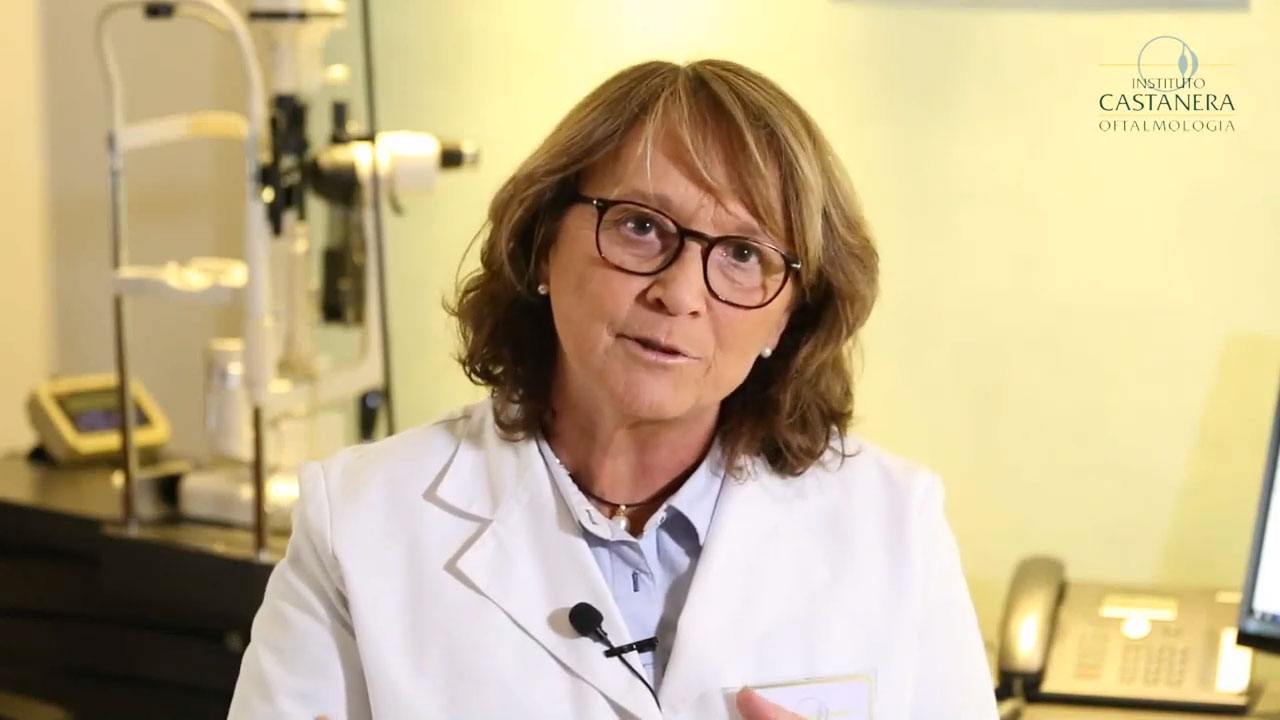
Dr. Alicia Serra Castanera, pediatric ophthalmologist, explains it in this video.
Ophthalmology – Electronic device screens: are they harmful to children?
Strabismus in children
Pediatric ophthalmology
Professionals who form the medical team for amblyopia
Dr. Alicia Serra Castanera
Dr. Gemma Romeu Cerrillo
Medical license no.: 23816 COMB
Dr. Alicia Serra Castanera
Graduated in Medicine and Surgery from the UAB in 1986, specialist in Ophthalmology. Her work at Instituto Castanera focuses on the medical and surgical diagnosis and treatment of pediatric eye disorders, as well as the treatment of strabismus in both children and adults. She takes part in numerous courses, congresses and scientific meetings, as well as in a clinical research trial on the efficacy of different drugs for the treatment of pediatric glaucoma, and in the “RTOC” (Pediatric Ophthalmology Telemedicine Network of Catalonia), aimed at improving the diagnosis and treatment of retinopathy of prematurity.
Medical Societies:
- Catalan Society of Ophthalmology, board member, Vice President
- Spanish Society of Ophthalmology (S.E.O)
- Spanish Society of Strabology (S.E.E)
- Spanish Glaucoma Society (S.E.G)
- European Paediatric Ophthalmological Society (E.P.O.S), board member
Medical license no.: 43275 COMB
Dr. Gemma Romeu Cerrillo
Graduated in Medicine and Surgery from the University of Barcelona in 2007. Specialist in Ophthalmology.
Master’s degree in Pediatric Ophthalmology at Hospital Sant Joan de Déu (University of Barcelona), where she teaches neuro-ophthalmology.
Her work at Instituto de Oftalmología Castanera focuses on the medical and surgical diagnosis and treatment of pediatric eye disorders, the treatment of strabismus in children and adults, and neuro-ophthalmology.
Medical societies:
- Catalan Society of Ophthalmology
- Spanish Society of Strabology (S.E.E)
Frequently asked questions
Failure to correct amblyopia can lead to total loss of vision in the eye, permanently and irreversibly, whether due to a lack of diagnosis or to not following the treatment prescribed by the professional.
Depending on each case, it can be a short treatment of a few months or it can last several years. An early diagnosis at a young age, between 3 and 4 years old, usually means that a shorter treatment is needed to achieve the desired outcome. But there are other factors that influence this.
At an early age, between 3 and 4 years old, they are practically 100%. From then on, the older the child, the more difficult it is to resolve. As the child approaches the age of 9, the chances of successful treatment decrease because the development of the eye is reaching its peak.
As long as the specialist indicates for the treatment, depending on the progress of the case. The patch is placed on both the eye with less developed vision and the more developed one. It is essential to follow the time or schedule of changes set by the ophthalmologist.
It is important to explain why they need to follow the treatment in language suited to their level of understanding. Nowadays there are eye patches with fun designs that encourage little ones to wear them. Stories and movies featuring characters who wear a patch or glasses can encourage them to stick with it. As they wear the glasses or the patch, they will get used to it, usually within a few days.