
Ptosis
We perform surgery to correct eyelid ptosis, or drooping of the upper eyelid, in both adults and children. Our highly qualified team of specialists and well-equipped facilities ensure the best possible outcome in lifting the eyelid and restoring function and aesthetics.
Inicio » Treatments » Oculoplastic and Aesthetic Surgery » Ptosis
What is ptosis?
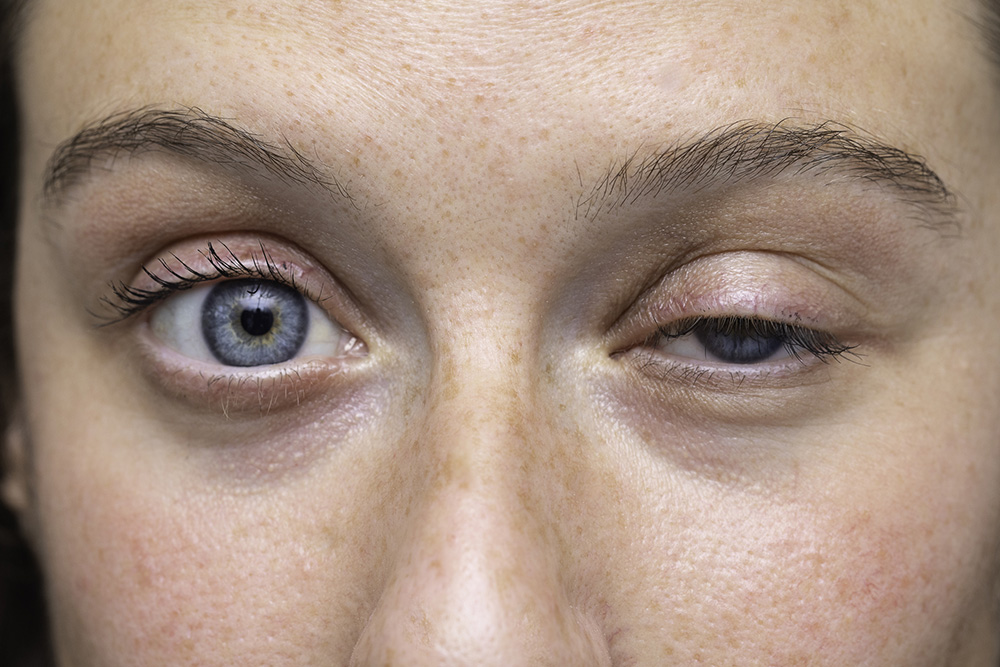
Eyelid ptosis is the drooping of the upper eyelid. It can occur in both adults and children and may affect one eye (unilateral) or both (bilateral).
Although age-related ptosis is often considered a cosmetic issue, it is also an ophthalmological problem. Ptosis blocks part of the visual field and, in severe cases, can completely cover the pupil.
At Instituto de Oftalmología Castanera, we perform the necessary tests for accurate diagnosis and effective treatment. Schedule a consultation with our specialists.
Ptosis or drooping eyelid caused by aging
The most common cause of ptosis is the passage of time and natural aging. This affects the eyelid by weakening the muscles responsible for its movement, reducing its function. Aging also leads to upper eyelid laxity.
In such cases, ptosis becomes both a cosmetic and functional issue, also impacting vision. Treatment corrects all three aspects:
- Aesthetics: A drooping upper eyelid can make the face look older, the gaze appear sad or tired. If it affects one eyelid or affects both unequally, it creates noticeable facial asymmetry.
- Functionality: Muscle weakness prevents normal eyelid movement, leading to discomfort and, in many cases, affecting self-esteem and quality of life.
- Vision: The drooping eyelid can partially cover the eye and reduce the visual field. Even in early stages, this creates visual difficulties that worsen over time. If the eyelid completely covers the iris, the visual field is blocked.
Schedule a consultation with our specialists at Instituto de Oftalmología Castanera for diagnosis and treatment.
Other causes of ptosis
Besides aging, ptosis can have other causes:
- Degenerative diseases: Certain conditions affecting muscles or nerves can impair the orbicularis muscles responsible for eyelid movement.
- Congenital ptosis: Congenital causes are the reason for ptosis in babies or young children. It’s usually visible at birth or during the first year of life.
- Injuries: Blows or accidental trauma in everyday life, work, or sports may damage the eyelid or affect the nerves that control its muscles, causing ptosis.
- Diseases: Conditions such as diabetes, strokes, tumors behind or around the eye, and myasthenia gravis, among others, may cause ptosis. If you have any of these conditions, it’s recommended to book a consultation to check for this problem and start early treatment if needed.
If you suffer from ptosis, think you might have it, or have a condition that could cause upper eyelid drooping, book a consultation with the specialists at Instituto de Oftalmología Castanera.
What is the treatment?
The correction of ptosis is always surgical, and is recommended in all cases, as it not only causes a feeling of heaviness in the upper eyelids but can also cause alterations in the upper or even central visual field in the most severe cases.
At our clinic, we work with different surgical techniques for upper eyelid correction or ptosis surgery. As highly qualified and experienced professionals, we choose the appropriate method for each patient based on our professional criteria, depending on the case and the needs, to provide the best possible functional and aesthetic outcome.
- Anterior approach ptosis surgery, performed through the skin with a natural incision along the eyelid. Requires stitches, which are removed after a few days, leaving a very small, barely visible scar.
- Posterior approach ptosis surgery, performed through the conjunctiva, leaving no visible scar.
The surgery is always outpatient, and it takes about 1 to 2 months for the eyelids to reach the desired height.
Schedule a consultation at I.O. Castanera with our team of plastic surgery and ophthalmology professionals specialized in ptosis. We treat ptosis in both children and adults. We have advanced technology and comfortable, hygienic facilities for the patient’s maximum comfort during the procedure.
Our specialists talk about ptosis
¿Qué es la cirugía oculoplástica?
Blefaroplastia superior: cirugía y recuperación
Blefaroplastia inferior y bolsas en los ojos
Lesiones palpebrales: cuándo consultar
Entropión y ectropión: alteraciones del párpado
Parálisis facial y afectación ocular
Ojo ciego doloroso: tratamiento y cirugía
Prótesis oculares: aspecto y recuperación
Tratamientos para rejuvenecer la mirada
Obstrucción de la vía lagrimal
Blefaroplastia: cuándo realizarla

Las malposiciones palpebrales
Professionals who form the medical team for ptosis
Frequently asked questions
Book a consultation with our specialists to assess your case and recommend the appropriate surgical treatment. At Instituto de Oftalmología Castanera, we provide the best aesthetic and functional outcome with the right treatment based on a thorough evaluation.
It is not a risky surgery—it is a safe procedure with minimal discomfort for the patient. Complications are very rare, and if they do occur, they are mild and temporary, such as small bruises or swelling that disappear within a few days.
The treatment for ptosis is always surgery. An operation is needed, which may be done via anterior or posterior approach depending on the case and the professional’s judgment. At Instituto de Oftalmología Castanera, we provide you with all the information you need during the preoperative phase, explain the treatment clearly, and answer any questions you may have.
It is ptosis that occurs in children. If it appears within the first year of life, it’s usually congenital, but it can also be caused by injury or illness during childhood. If it appears or you suspect it has, consult our specialists.
