
Blepharoplasty
We perform blepharoplasty surgeries to remove excess skin and under-eye bags, achieving a naturally refreshed and more vital facial appearance. Our center offers advanced techniques with fast recovery and natural results, without visible scars.
Inicio » Treatments » Oculoplastic and Aesthetic Surgery » Blepharoplasty
What is blepharoplasty?
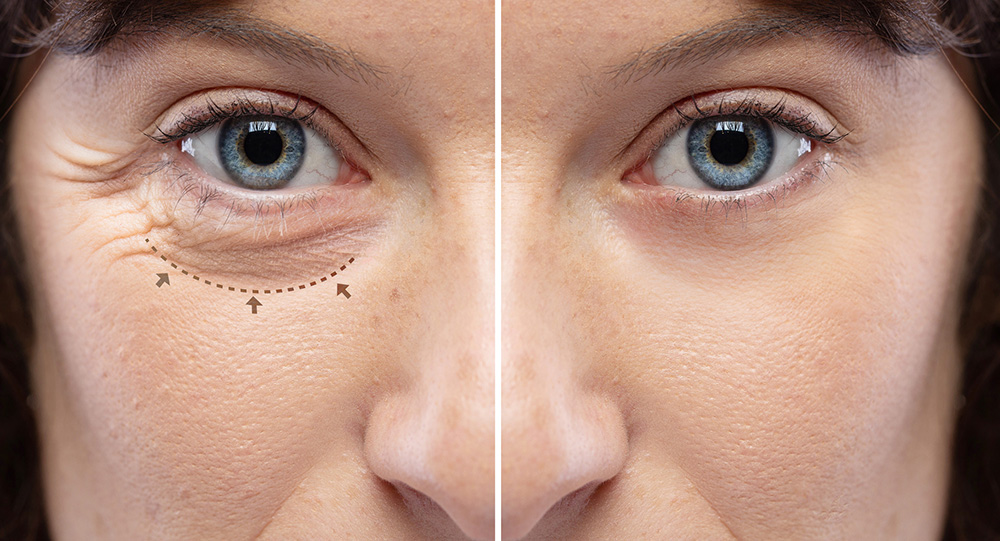
Blepharoplasty is currently the most requested and performed aesthetic surgical procedure. It essentially consists of removing excess skin from the upper eyelids and under-eye bags from the lower eyelids, resulting in a much fresher and more “rejuvenated” look.
Its popularity stems from the significant difference it makes to the face and how one is perceived by others. Excess skin and under-eye bags give the impression of a tired or sad face. Correction through blepharoplasty offers an aesthetic improvement that presents a natural-looking face and gives a younger appearance, often perceived as more rested, relaxed, and vibrant.
This aesthetic enhancement can mean a significant change for many patients. Looking better makes them feel more confident. For this reason, blepharoplasty is in high demand among both men and women.
At Instituto Castanera, a team of highly qualified plastic and aesthetic surgery professionals with years of experience performs blepharoplasty procedures using advanced technology to achieve natural, harmonious results with no visible marks. Continuous training and passion for their work allow us to provide high-quality, professional, and personalized care tailored to each patient’s needs.
What are the benefits of blepharoplasty?
- Facial aesthetic improvement and self-confidence. Removing excess skin from the upper eyelid and under-eye bags gives the face a “rejuvenated” appearance. More open, wrinkle-free eyes make the face look more rested and vibrant. This aesthetic improvement often translates into increased self-esteem and confidence thanks to a more natural and youthful appearance.
- Improved visual field. Blepharoplasty offers significant benefits for visual capacity. While it does not correct vision problems directly, removing excess skin can expand the eye’s field of perception. In some cases, drooping upper eyelid skin may cover part of the eye, reducing the field of vision. Removing it resolves the issue.
- Strengthening of the orbicularis muscles of the upper eyelids for better eyelid function. Additionally, removing excess skin reduces the effort required to lift and lower the eyelid.
Schedule an appointment with our blepharoplasty specialists at Instituto de Oftalmología Castanera.
What is the treatment?
At our clinic, we use surgical techniques that are minimally invasive, allowing for a quick recovery and natural results with no visible scars.
Blepharoplasty is always an outpatient procedure. It is performed under local anesthesia with sedation. Postoperative recovery is usually smooth, with mild discomfort, swelling, and bruising around the eyes lasting 10–14 days, which resolve on their own.
Each case must always be carefully assessed by our experts to achieve the best possible functional and aesthetic result. The preoperative consultation is essential to study your case, explain the procedure and expected outcomes, and answer any questions you may have.
When is it advisable to undergo blepharoplasty?
- Aesthetic concerns and the desire for a more youthful appearance. Achieving a more relaxed, wrinkle-free look with more open eyes and a natural result is the main reason why blepharoplasty is a highly sought-after aesthetic and plastic surgery procedure.
- A feeling of eye fatigue due to the weight of excess eyelid skin and/or weakening of the orbicularis muscles of the upper eyelids. The result is a lighter, more relaxed, and rested sensation.
- Loss of peripheral vision due to excess eyelid skin.
Book an appointment with the blepharoplasty specialists at Instituto de Oftalmología Castanera. We have the knowledge, experience, and advanced technology to offer you the natural, scar-free, and attractive result you’re looking for.
We have the appropriate facilities and equipment to ensure maximum patient safety and comfort during blepharoplasty procedures.
Our specialists talk about blepharoplasty
¿Qué es la cirugía oculoplástica?
Blefaroplastia superior: cirugía y recuperación
Blefaroplastia inferior y bolsas en los ojos
Lesiones palpebrales: cuándo consultar
Entropión y ectropión: alteraciones del párpado
Parálisis facial y afectación ocular
Ojo ciego doloroso: tratamiento y cirugía
Prótesis oculares: aspecto y recuperación
Tratamientos para rejuvenecer la mirada
Obstrucción de la vía lagrimal
Blefaroplastia: cuándo realizarla
Professionals who form the medical team for blepharoplasty
Frequently asked questions
When it is a minimally invasive procedure like the ones we perform at Instituto Castanera, the recovery is smooth. For 12 to 14 days, there may be mild discomfort from swelling and bruising around the eyes, which disappear on their own. For best results, we recommend following your specialist’s advice during these two weeks. These are simple guidelines, such as elevating your head while sleeping to reduce inflammation in the treated area.
In the first days after surgery, it is not advisable to engage in intense physical exercise, contact sports, swimming, or lifting heavy objects.
This issue can arise from many causes, including hereditary factors. However, you can help prevent it by keeping the skin well-hydrated and protected from the sun. This also helps extend the effects of blepharoplasty.
It is a long-lasting procedure — you will notice the improvement for years. The duration of results depends on factors such as age and facial care habits. The procedure can be safely repeated in the future, with good results, if needed.
