
Cataracts
We remove cataracts to improve your vision and reduce the deterioration of your quality of life. Our team of specialists applies the advanced techniques and technologies you need to see clearly and enhance your visual acuity.

Inicio » Treatments » Cataracts
What are cataracts?
Cataracts are an opacification or loss of transparency of the eye’s natural lens, leading to vision problems and consequently a decrease in the patient’s quality of life.
There are several causes of cataracts. The most well-known is age, but it is not the only one. Cataracts can also be congenital, caused by trauma, or result from certain systemic diseases, among other reasons.
When should you suspect that you have a cataract problem that requires specialized ophthalmological care? The most common symptoms of cataract onset include:
- Decreased visual acuity
- Difficulty adapting vision to darkness
- Greater need for light when performing tasks you used to do with less light, such as reading, sewing, writing, or similar activities
- Increased glare or halos around lights, headlights, or bulbs
- Cloudy or blurry vision
A patient with cataracts may experience some or all of these symptoms, in one or both eyes.
Cataracts are a treatable eye condition with the help of professional care and specialized ophthalmologic intervention.
At Instituto de Oftalmología Castanera, we provide advanced treatments for cataract removal using innovative technology and refined techniques. This allows patients to benefit from a less invasive procedure and a very quick postoperative recovery.
In the past, people affected by cataracts had to endure a prolonged deterioration in their vision before receiving treatment, which negatively impacted their quality of life.
Today, advanced technology enables early intervention for better outcomes. This has the added benefit of improving the patient’s quality of life and minimizing the disruption to daily activities, as it eliminates the need to wait for the “right time” to undergo surgery.
In fact, the safety and effectiveness of cataract surgery is now so high that it can even be recommended for purely refractive purposes. This means that a specialist may advise the procedure to eliminate the need for glasses or contact lenses, even before a cataract has developed.
If you suspect or know that you have cataracts, schedule an appointment for an initial assessment with our specialists.
What is the treatment?
Cataract surgery involves removing the opacified natural lens and replacing it with an artificial lens or a Premium intraocular lens using micro-incision techniques without sutures. Various technologies can be used for this procedure, including ultrasound and laser.
When the natural lens is replaced with a Premium lens, there are several types available depending on the patient’s needs: aspheric intraocular lenses, toric lenses for astigmatism correction, extended depth-of-focus lenses, or multifocal/trifocal lenses that make reading glasses unnecessary.
Multifocal and trifocal intraocular lenses are an advanced solution that enhances visual quality. They are designed to provide clear focus at far, intermediate, and near distances simultaneously, eliminating the need for reading glasses.
The power of the intraocular lens each patient requires is calculated using biometric data obtained in a preoperative examination. This ensures the best possible focus after cataract surgery.
There are also other types of intraocular lenses, such as the so-called extended depth-of-focus lenses or EDoF. These new lenses provide good focus at far and intermediate distances.
At Instituto de Oftalmología Castanera, we apply our professional expertise to recommend the best solution for your case, based on comprehensive and rigorous preoperative testing prior to cataract treatment.
Improve your vision and quality of life. Schedule an appointment for an initial consultation with our cataract treatment specialists. At Instituto Castanera, we have a highly qualified team of professionals constantly updating their knowledge, advanced equipment, and comfortable facilities with strict hygiene standards, offering expert and personalized care to our patients.
Our specialists talk about cataracts
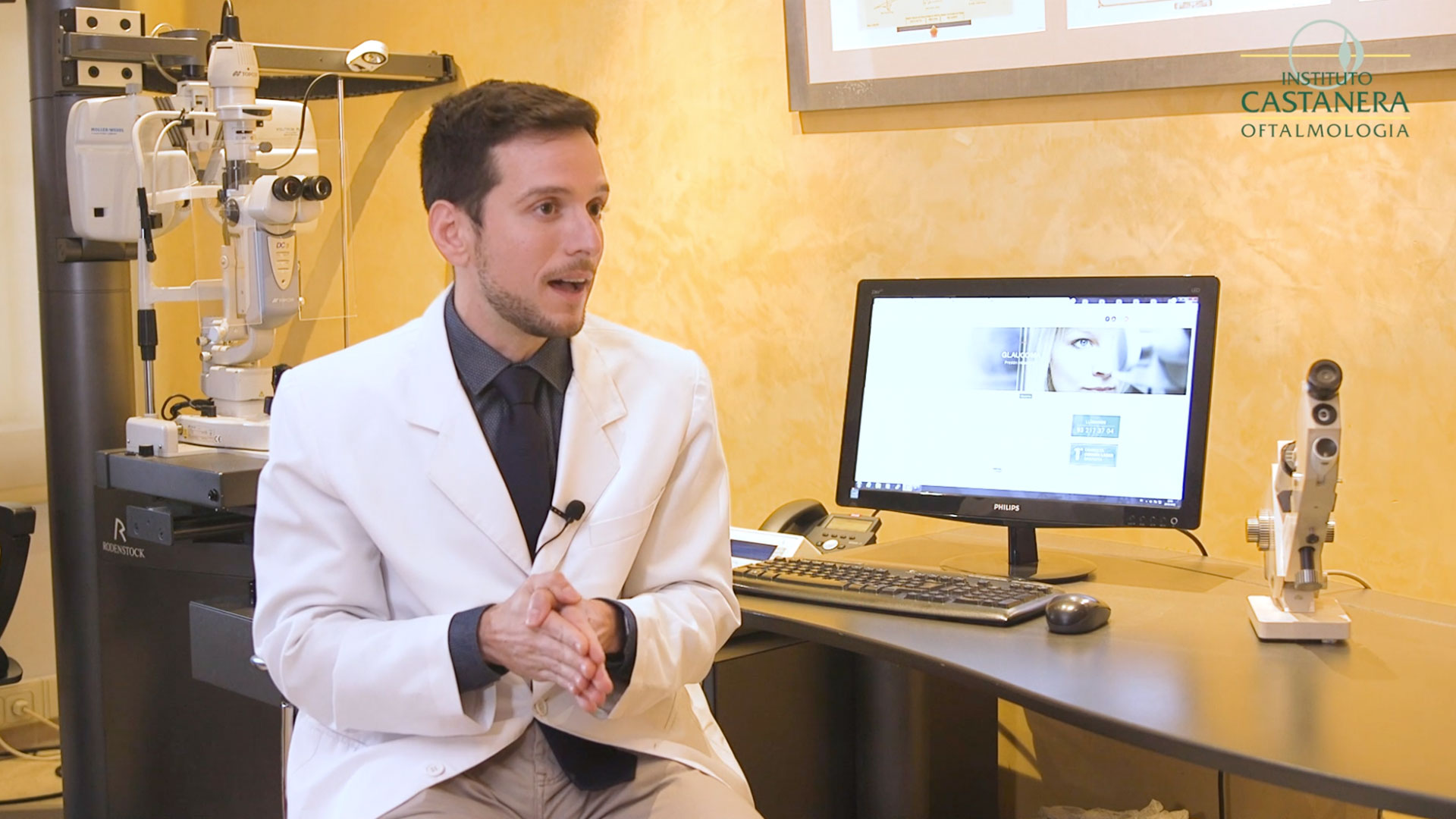
¿En qué consiste la cirugía de la catarata?

¿En qué consiste la cirugía de la catarata?

¿Qué es una catarata?
Professionals who form the medical team for the treatment of cataracts
Frequently asked questions
The anesthesia used for cataract surgery is topical, with drops. Mild sedation is also performed to make the surgery more comfortable for the patient.
It is a quick procedure; the duration of the surgery is approximately 15 minutes.
Yes, an intraocular lens is always necessary to replace the extracted natural lens. There are several models of intraocular lenses. According to the patient’s characteristics and needs, the medical team will implant the appropriate one.
Visual recovery is progressive in the days following cataract surgery. In the first days after surgery, it is normal to notice light sensitivity and glare, which disappear on their own.
In addition to eliminating the cataract, these lenses correct vision problems such as presbyopia, myopia, hyperopia, and astigmatism, as needed by the patient, eliminating the dependence on glasses or contact lenses.
The sooner, the better—this way you won’t have to spend more time with deteriorated vision, visual recovery will be faster, and you will enjoy a better quality of life. It is no longer necessary to wait for the cataract to mature or worsen. From the moment you notice symptoms and it is confirmed that a cataract exists, it can be operated on—even in very early stages.
